Solar Panels and HOAs: 30 States Now Block Your HOA From Saying No
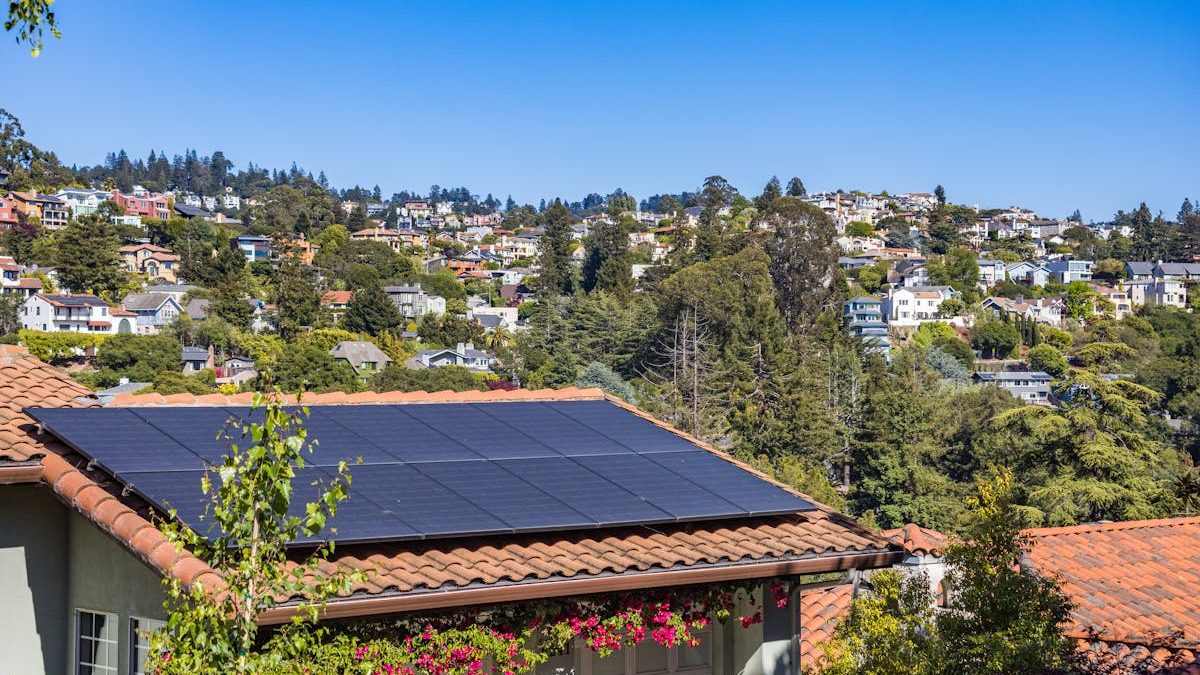
For decades, HOAs blocked solar installations on aesthetic grounds. As of 2026, more than 30 US states have passed "solar access" laws that override most HOA solar bans. Here is the full list, what each state allows, and the loopholes HOAs still use to slow projects down.
For homeowners shopping rooftop solar in 2026, the biggest barrier is no longer cost or financing. It is whether the homeowners association will approve the installation. The good news: in roughly 30 US states, an HOA cannot legally say no.
This article covers which states have passed solar-access laws, what each statute actually allows the HOA to regulate, and the procedural loopholes some boards still use to slow installations.
What a Solar-Access Law Does
A solar-access law, sometimes called a solar-rights law, is a state statute that explicitly prohibits HOAs from banning rooftop solar panel installations. Most also limit how restrictive the HOA can be about placement, color, panel type, and review timelines.
The first solar-access law was California Civil Code 714, passed in 1978. After 2015, dozens of additional states followed as residential solar adoption climbed past 5% of US homes.
States With Strong Solar-Access Protection
These states explicitly prohibit HOA bans on rooftop solar and limit aesthetic restrictions to reasonable bounds:
California, Arizona, Colorado, Texas, Florida, Nevada, Maryland, Virginia, New Jersey, Massachusetts, Maine, New Hampshire, Vermont, Oregon, Washington, Hawaii, North Carolina, South Carolina, Indiana, Illinois, Wisconsin, Minnesota, New Mexico, Utah, Delaware, Rhode Island, Connecticut, Louisiana, Iowa, and the District of Columbia.
Texas (Property Code 202.010) and Florida (Statute 163.04) are particularly clear: an HOA covenant that prohibits solar panels is unenforceable as a matter of law, regardless of when the covenant was recorded.
What HOAs CAN Still Regulate
Solar-access laws do not give homeowners unlimited rights. In most states, HOAs retain authority to:
Require advance written notice and an architectural review application before installation.
Specify the panel be mounted on the rear or side roof slope when that does not reduce production by more than 10%.
Require dark or matte panel frames over chrome or polished aluminum.
Mandate that conduit runs and inverters be hidden or screened on the building exterior.
Set reasonable installer-insurance and licensing requirements.
The line every state draws: aesthetic preferences cannot reduce solar production by more than a small percentage (typically 10%) or increase installation cost by more than a stated dollar amount (typically $1,000-2,000).
The Three Loopholes Boards Still Use
Even in solar-protected states, some HOA boards stall solar applications through procedural games. The three most common:
Endless review delays. The board "requests more information" repeatedly, dragging a 30-day review into six months. Most state laws cap the review window at 60 days, and silence after that period counts as automatic approval.
Excessive documentation requirements. Asking for engineering stamps, structural reports, and inspector affidavits that no other home modification requires. Several state attorneys general have flagged this as bad faith.
Aesthetic claims that are not in the official Architectural Standards. The board denies on "community character" grounds without a written rule. Without a written, board-adopted standard, the denial is generally unenforceable.
How to Push Back
If your board rejects or delays a solar application in a solar-access state:
Request the written denial citing the specific covenant being enforced. If they cannot cite one, the denial is likely invalid.
Send a certified letter referencing your state's solar-access statute by name and section number, and request reconsideration within 14 days.
If the board still refuses, file a complaint with the state attorney general's office. In Arizona, California, and Texas, the AG offices have actively prosecuted HOA boards for solar denials.
In some states, including Florida and Texas, homeowners can also recover attorneys' fees if they sue and win.
States Where Solar Bans Are Still Mostly Legal
A handful of states have NO solar-access law, meaning HOA covenants can still ban or heavily restrict solar:
Alabama, Alaska, Arkansas, Georgia, Idaho, Kansas, Kentucky, Michigan, Mississippi, Missouri, Montana, Nebraska, North Dakota, Ohio, Oklahoma, Pennsylvania, South Dakota, Tennessee, West Virginia, and Wyoming.
Many of these states have introduced solar-access bills in recent sessions, with Tennessee and Georgia closest to passage in 2026.
The Buyer Bottom Line
If solar matters to you, check two things before you buy: (1) does your prospective state have a solar-access law? and (2) does the HOA Architectural Standards document include solar-installation guidelines? A community with written, reasonable solar standards is signalling that it has worked through the policy. A community whose CC&Rs simply ban "exterior modifications" is signalling that you will likely have a fight on your hands, even if state law is on your side.
Sources: Database of State Incentives for Renewables & Efficiency (DSIRE), California Civil Code 714, Texas Property Code 202.010, Florida Statute 163.04, Community Associations Institute solar policy briefs (2024-2026).